
How do we normalize something when it’s clear there is “no such thing as normal”?
It’s easy to normalize things that cater to our comfort levels, so naturally something like grief is way, way below the list of practices like regifting toys for birthday party gifts.
In the genius Disney Pixar film “Inside Out”, the character Sadness is depicted as a short, blue colored dumpy little woman with nerdy glasses, a distinct depressed whine to her voice and is followed by a literal rain cloud. She is my favorite character because in the film she is the least accepted and valued by the other emotions, but only until she was needed in a very important moment. (If you haven’t seen this movie, you MUST!)
In a general sense, anger seems to be acceptable, because it is often associated with social justice, standing up for what is right and “speaking your truth”. Joy is obviously a favorite, because our world views joy as a synonym for the word “happy”, and disgust is just as acceptable when applied to things like broccoli and sulfur infused smells; it’s okay to be disgusted, angry and of course joyful; who doesn’t want to be the synonym of happy?
But sad?
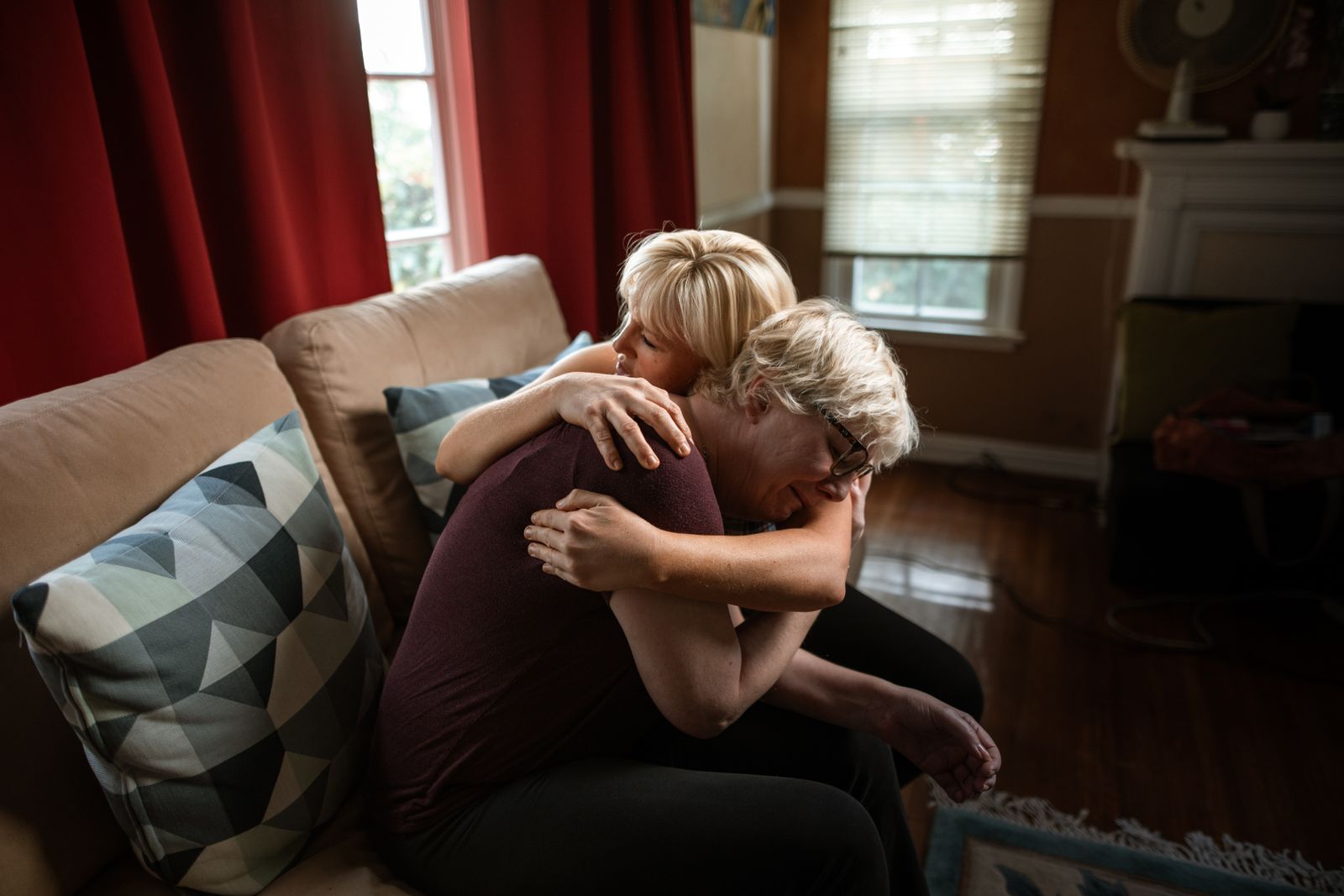
Sadness and grief often make us more vulnerable than any other emotion. When we are grieving or simply sad, it is a truly personal experience that swings the door wide open for others to view things that are hard and uncomfortable in our lives. It prompts a variety of responses from people, ranging from ignoring the person with or without realizing it, wanting to fix things, as well as the grief and sadness they encounter may remind them of their own blue reality that they are choosing to ignore and/or keep hidden.
So how are we to respond to this as humans, but more importantly, what is the appropriate Christ like response to normalizing grief?
First, we need to recognize that sadness and grief are just as much a part of being human as any other emotional, physical and spiritual component. Our world is airbrushed, photo shopped, and reality cropped; we are conditioned and exposed to believe that what is shown is the real deal, and that we must be doing something wrong if our world isn’t Instagram perfect with the correct filter. I find this interesting because the way of the world is to accept and embrace whatever feeling you want to have, as well as anything that you want to do in life, and yet most are still wary when it comes to dealing sadness and grief. It is because of sin that we inerrantly know that sadness and grief are hard and messy. As Christians we have the eternal hope and promise of entering into heaven where there will be no sadness, grief, tears, pain and evil. As Christians we do not “grieve without hope” (Romans 15:13). But until then, we are called to endure the perils of the world as we know it, which in turn pushes us to rely on Christ and Christ alone.
Second, we need to reframe and reword the experiences in our lives that are not a physical death. The physical death of someone we love forces grief, as there is no other reasoning behind the loss. For example, if a woman ends a relationship with her boyfriend of five or more years because he will not commit to her in marriage, she may have a period of sadness and even depression of what was and what as lost, but there is also the powerful hope of meeting a man that will commit to marrying her. These scenarios are rarely described as something a person grieves, but rather a “hard time” in life that can be overcome by something good.
I recently have been grieving a job that I had for only three years. I had to leave the job because I was unable to find childcare for my kids, trading my business casual attire for sweats and a sneakers, as well as intelligent, goal seeking team comradery to a full time employee that doesn’t say a whole lot but knows how to dismantle anything you’ve put together and a part time employee who is learning how to play nice with her co-worker. While what I traded these things for is good and Gods sovereign plan from the beginning, it is still a grief.
Grieving isn’t a bad thing. Grieving is a natural way to take the pressure off of a hard stop to life as we know it. It enables us to process emotions and feelings that otherwise would get stuffed into a nesting boxes, putting a little of it in the small box, then the medium box, and so on, until all the boxes and more are full and shoved into a closet to be dealt with at a different time, or not at all.
“Everyone grieves differently” is a true and overused statement, but we cannot let that statement paint a general picture of what grief looks like. It can look like not being able to visit a certain restaurant because of what you thought was a good memory isn’t so good any more. It can look like moving away for a “fresh start” and a “change of scenery.” It can be over something seen or unseen, like a miscarriage or the breasts removed from a woman who has breast cancer.
In order to normalize grief, we must be willing to see grief as good. Additionally, we must be willing to encourage and affirm others that tears and anger aren’t embarrassing and weak, they are necessary. The Lord graciously allowed me to grieve hard things first before He saw fit to allow me to grieve the death of my precious mother and the brother that I was just starting to know well after years being ships passing in the night, with his addiction and our family trauma serving as the darkness to the storm.
Prior to these endings there were jobs that were taken away with no reason as to why, as well as a relationship that ended with “I don’t love you like my brother loves my sister-in-law.” (Said after just a few months of dating? I still blame that relationship on the concussion I sustained from a fall.) Locking the door and handing in the keys to cute apartments, friendships that meant the world to me but didn’t mean that much to the other person, the fact that I never really had a childhood where I wasn’t acting and feeling 10 years older than I actually was; and so many more that I cannot put to words at this time.
I pray that this post has helped you to stop and reflect on the grief you’ve experienced in your life, but more importantly, how grieving and hardship has created a more secure foundation to endure the storm clouds of life and remind us yet again that this present world is not our home.
Grieve with hope but have hope while grieving.